


Asthma + Lung UK
The UK’s leading lung charity, offering advice and support to people living with asthma and other lung conditions.
Visit the Asthma + Lung UK website
Children’s Cancer and Leukaemia Group (CCLG)
We provide trusted information and guidance for children and young people with cancer, and everyone supporting them.
Visit the CCLG website
Children’s Liver Disease Foundation
Fighting childhood liver disease by providing information, emotional support and research.
Visit the Children’s Liver Disease Foundation website
CoppaFeel!
The only breast cancer charity educating young people on the importance of checking your chest.
Visit the CoppaFeel! website
Crohn’s & Colitis UK
Information and support for people affected by Crohn’s and ulcerative colitis and healthcare professionals treating them.
Visit the Crohn’s & Colitis UK website
Epilepsy Action
Improving the lives of everyone affected by epilepsy through raising awareness and providing information and support.
Visit the Epilepsy Action website
Expert Self Care
Free self-help and signposting apps to improve health knowledge, promote self-care and reduce pressure on services.
Visit the Expert Self Care website
Growing Different
A charity for children with complex neurodevelopmental differences and their families.
Visit the Growing Different website
Liver UK
Working to improve liver health for all and supporting those affected by liver disease or cancer.
Visit the Liver UK website
Meningitis Now
The UK’s largest meningitis charity offering support, funding research, and raising awareness.
Visit the Meningitis Now site

Rethink Mental Illness
Advice and information service, campaigning, training and services for people experiencing mental illness and carers.
Visit the Rethink Mental Illness website
Teenage Cancer Trust
Support from specialist nurses, youth support coordinators and tailored information for young people with cancer.
Visit the Teenage Cancer Trust website
Terrence Higgins Trust
The UK’s leading HIV and sexual health charity, supporting people living with HIV and improving sexual health.
Visit the Terrence Higgins Trust website
The Robin Cancer Trust
Educating young people on the signs and symptoms of testicular and ovarian cancers and support to those affected.
Visit the Robin Cancer Trust
Young Epilepsy
Transforming the lives of children and young people with epilepsy.
Visit the Young Epilepsy website
YoungMinds
YoungMinds is the UK’s leading charity fighting for children and young people’s mental health.
Visit the YoungMinds websiteResources

App: Information and support for young carers
If you’re a young person and help look after someone at home, this app from Expert Self Care is for you. It offers trusted advice, practical tips, and links to support services – made with and for young carers. Private and easy to use, whenever you need it.
Find out more and download the app here
Leaflet: The importance of checking your chest
When breast cancer is diagnosed early, survival rates are higher. This leaflet includes information on the signs of breast cancer, how to check your chest and natural chest changes. It is available in English and 8 additional languages.
Download the leaflet via the CoppaFeel! website here
Posters: Chest checking for trans and non-binary people
Developed with LGBTIQ+ cancer charity OUTpatients, this poster series gives information on the signs of breast cancer and guidance on how to check. It also signposts more tips on how to get started, dealing with dysphoria when checking, and checking after top-surgery or with implants.
Download the posters from the CoppaFeel! website here
Tool: Use Self-Checkout to check your chest
CoppaFeel!’s online Self-Checkout tool guides younger people through monthly chest checking in three steps: look, feel and notice – helping them know their normal and notice any unusual changes early. Users can choose the terms they prefer for their body and sign up for monthly reminders via text, email or calendar.
Use the Self-Checkout tool via CoppaFeel!'s website here
Toolkit: Crohn’s and colitis Talking Toolkit
No-one knows your Crohn’s or colitis like you do, but it can be hard to talk about it. The Talking Toolkit is here to help find the right words to share what you’re going through. Whoever you want to talk to, it’s got the words to help break the ice.
Create your bespoke toolkit via the Crohn's & Colitis UK website here
Toolkit: Migraine in further and higher education
This toolkit provides information for students with migraine on how to manage the impact of their condition on their studies. It covers reasonable adjustments, legal rights and how to discuss the impact of migraine with education providers.
Find out more about managing the impact of migraine on the Migraine Trust website
Video: Delayed period after morning after pill – what you need to know
NHS GP Dr Sylvia explains why your period can be late after the morning after pill. She covers when it should come back, when to take a pregnancy test and when to get medical help.
Watch Dr Sylvia's video on delayed period after the morning after pill on YouTube here
Video: What is the vulva?
GP Dr Sylvia breaks down the vulva – labia, clitoris, urethra and vaginal opening. She explains what each part does, what looks normal and varies, and the right words to use when talking to a doctor about symptoms.
Watch Dr Sylvia's video explaining the vulva via YouTube here
Web page: Asthma, teenagers and young people
There are lots of things that can affect your asthma as you grow up. This page offers advice about moving away from home and managing your asthma independently. It also covers alcohol and recreational drugs, smoking and vaping, sex and relationships, mental health and more.
Find out more on the Asthma + Lung UK website here
Web page: Autism and mental health
This resource explores what autism is and how autism and mental health can be interlinked. It also covers the support and care autistic people are entitled to.
Find out more about autism and mental health on the Royal College of Psychiatrists website here
Web page: Bipolar disorder
This guide explains what bipolar disorder is, including the different types and common symptoms. It covers what mood episodes can feel like, how to get support, and ways to manage your mental health. You’ll also find information on treatment options and tips from young people who have experience of bipolar disorder.
View the web page on bipolar disorder via the YoungMinds website here
Web page: Going back to university after cancer treatment
Whether you’re excited or anxious about going back to uni after cancer treatment, it can be an adjustment. Find out more about what support you can get and what benefits you might be entitled to on this page.
Find out more about support on the Teenage Cancer Trust website here
Web page: Going to university with epilepsy
Practical guidance for students with epilepsy who are planning to attend university. It covers choosing a university, disclosing epilepsy, accessing disability support and funding, accommodation considerations, travel, medication management, safety planning. It also has tips for making the most of university life while managing epilepsy.
Find out more via the Epilepsy Society website here
Web page: Improve your mental wellbeing
Mind’s resources on wellbeing explain what mental wellbeing is, grounded in people’s lived experience, and gives tips to help you take care of your mental wellbeing. The information is carefully tailored, with separate guides for helping young people to understand mental health and tips to improve their wellbeing.
View the mental wellbeing web page here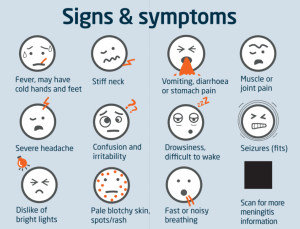
Web page: Meningitis signs and symptoms
Meningitis can affect anyone, of any age, at any time. It can strike quickly and become life-threatening within hours. Being aware of the signs and symptoms of meningitis, and seeking urgent medical advice if concerned, can save lives.
Find out more about signs and symptoms on the Meningitis Now website here
Web page: Ovarian cancer – recognise the signs and symptoms
Ovarian cancer is 90% curable when caught early. But there is no national screening programme that detects it, so it is important to know the symptoms. Learn the symptoms of ovarian cancer on this web page.
Learn more about the signs of ovarian cancer on the Robin Cancer Trust website here
Web page: Returning to studying after someone dies
Going back to college or university after someone dies can feel overwhelming. This page explains ways to support a young person returning to education after someone’s died. And how to help make sure they get the support they need.
Find out more about returning to education after someone dies on the Marie Curie website here
Web page: Self-harm
This guide explains what self-harm is, why someone might hurt themselves, and how to cope with difficult feelings in safer ways. It includes advice on getting support, talking to someone you trust and what to do if you’re worried about a friend, with guidance created for and by young people.
View the web page on self harm via the YoungMinds website here
Web page: Sexual health for trans and non-binary people
Information about sexual health for trans and non-binary people, created by and for trans and non-binary communities. Find practical guidance on managing risks, maintaining good sexual health, and having a positive, fulfilling sex life. Includes tailored information for trans women and trans feminine people, and trans men and trans masculine people.
Find out more via the Terrence Higgins Trust website here
Web page: Signs of cancer in young people
This page highlights the most common signs of cancer in young people. This includes lumps and swellings, mole changes, unexplained tiredness, persistent pain and unexplained weight change. Young people are encouraged to see their GP as soon as possible if they notice any of these symptoms.
Find out more on the Teenage Cancer Trust website hereWeb page: Studying with a mental health condition
This information looks at how studying can support people with mental health conditions. It includes the different types of courses available and the help you can get. It explains support services, financial assistance, reasonable adjustments and where to get advice if you have difficulties while studying.
Find out more about studying and mental health on the Rethink Mental Illness website here
Web page: Studying with asthma
Find out about managing your asthma at university and during exam periods. This includes advice about missing classes or deadlines, mitigating circumstances and mental health.
View the information on the Asthma + Lung UK website here
Web page: Testicular cancer – symptoms and how to check
Testicular cancer is 95% curable when caught early. The best way to recognise symptoms is to check your testicles monthly. Learn how to check yours and the symptoms of testicular cancer on this web page.
Learn more about the signs of testicular cancer on the Robin Cancer Trust website here
Web page: Understanding exam stress
Mind has information about how exam stress can affect your mental health. The page includes tips for coping and where you can find support. Originally designed for 11 to 18 year olds, the tips are useful for anyone studying.
Find out more about exam stress on the Mind website here
Web page: Understanding psychosis
This resource looks at psychosis. Psychosis can start during times of change. It’s important that young people know the signs so they can recognise them in themselves or a friend.
Find out more about psychosis on the Royal College of Psychiatrists website here