This guide is to help you understand false health information. Scroll down for translated guides and audio.
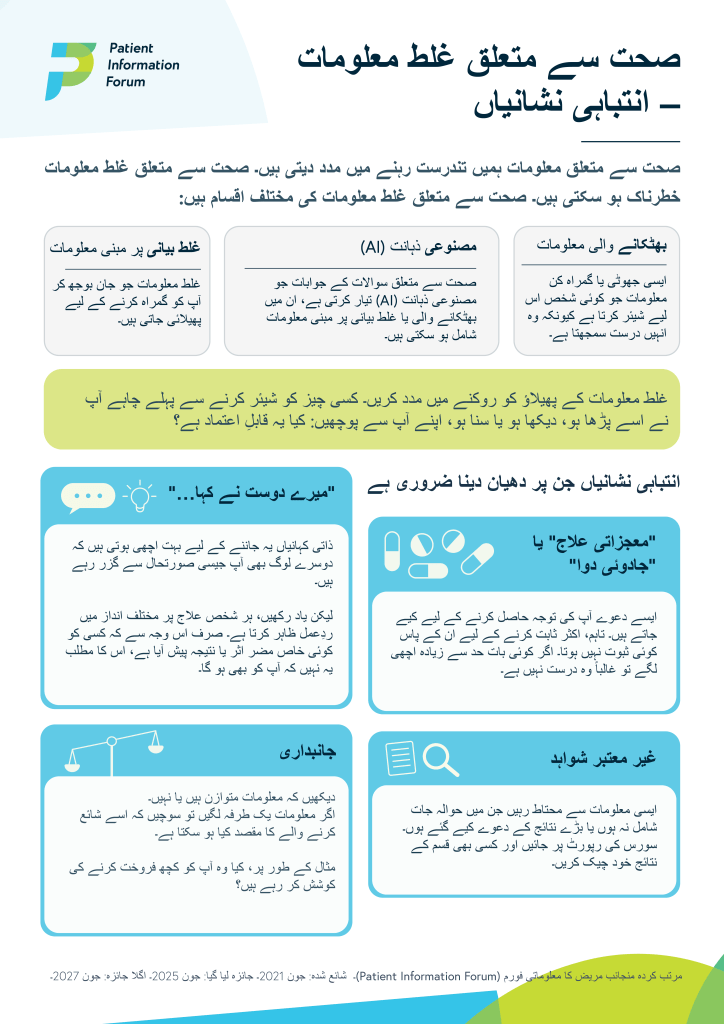
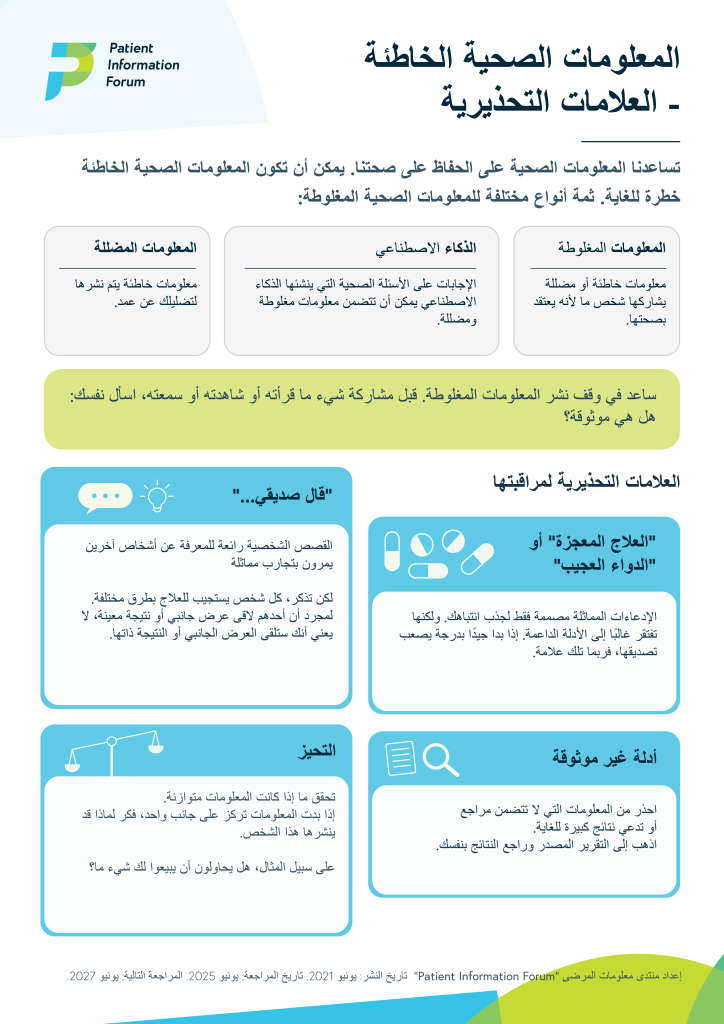
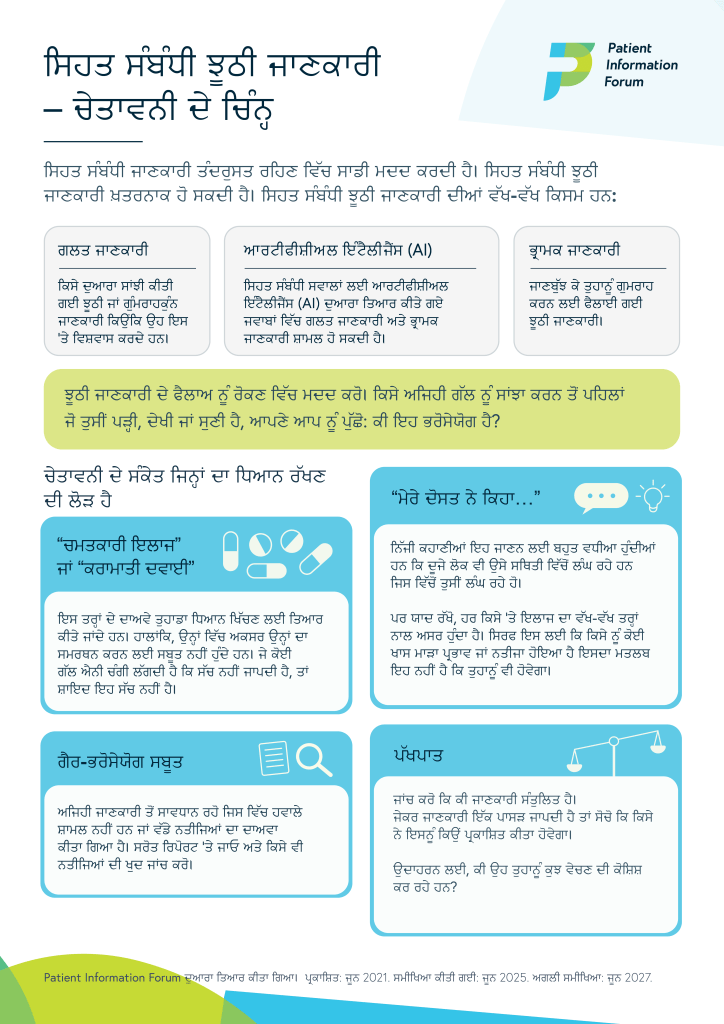
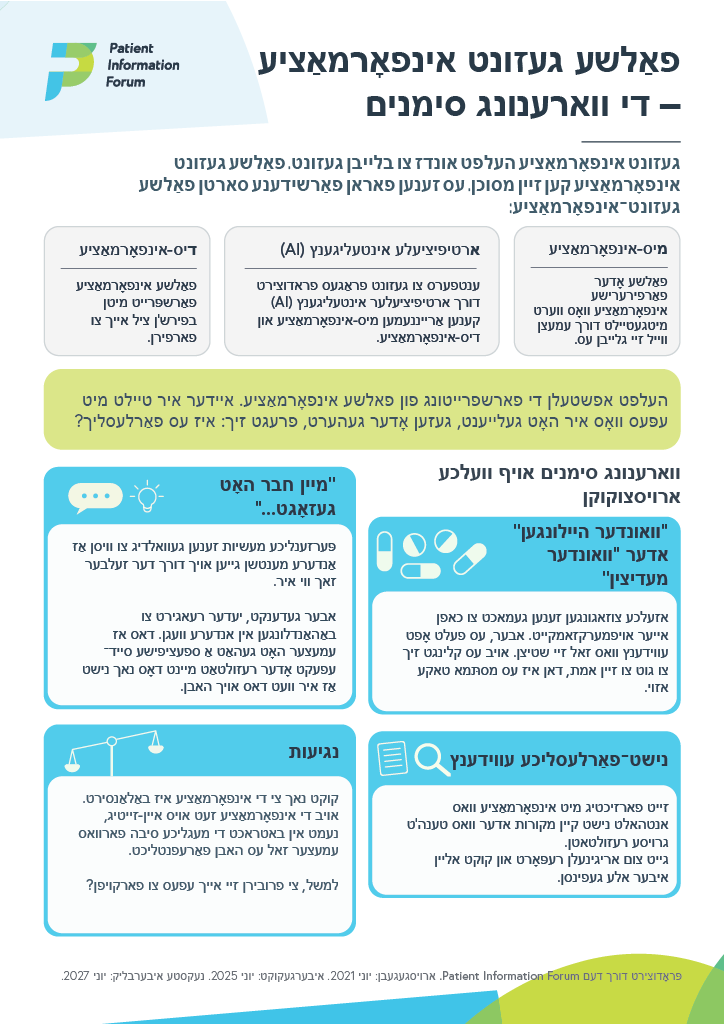
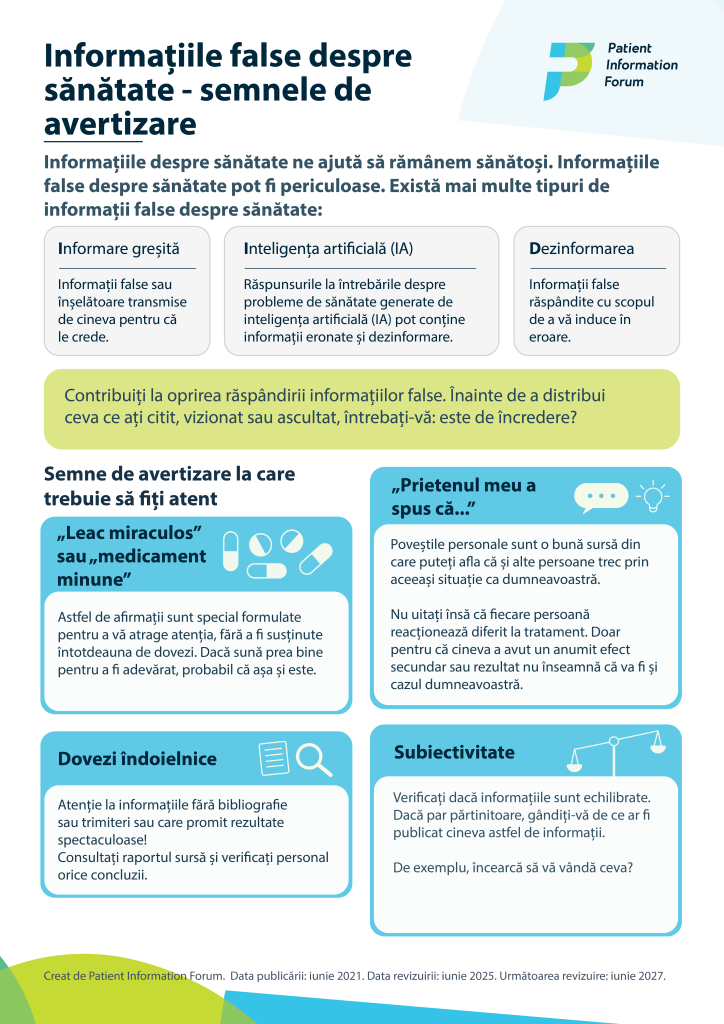
Health information helps us to stay well. False health information can be dangerous. There are different types of false health information:
- Misinformation – False or misleading information shared by someone because they believe it.
- Artificial intelligence (AI) – Answers to health questions generated by artificial intelligence (AI) can include misinformation and disinformation.
- Disinformation – False information spread to mislead you on purpose.
Help stop the spread of false information. Before you share something you’ve read, watched or listened to, ask yourself: is it reliable?
Warning signs to watch out for
“Miracle cure” or “wonder drug”
Claims like this are designed to catch your attention. However, they often lack evidence to back them up. If it sounds too good to be true it probably is.
Unreliable evidence
Be careful of information which does not include references or claims big results. Go to the source report and check any findings yourself.
Bias
Check if the information is balanced. If the information seems one sided think about why someone might have published it. For example, are they trying to sell you something?
“My friend said…”
Personal stories are great for knowing other people are going through the same thing as you. But remember, everybody responds to treatment in different ways. Just because someone has had a particular side effect or outcome does not mean you will.
Translated guides
Download the guide in Romanian – Română – by clicking here or listen by clicking on the play button.