This guide is designed to help you understand what BMI is and why doctors use it. Scroll down for translated guides and audio.
What is BMI?
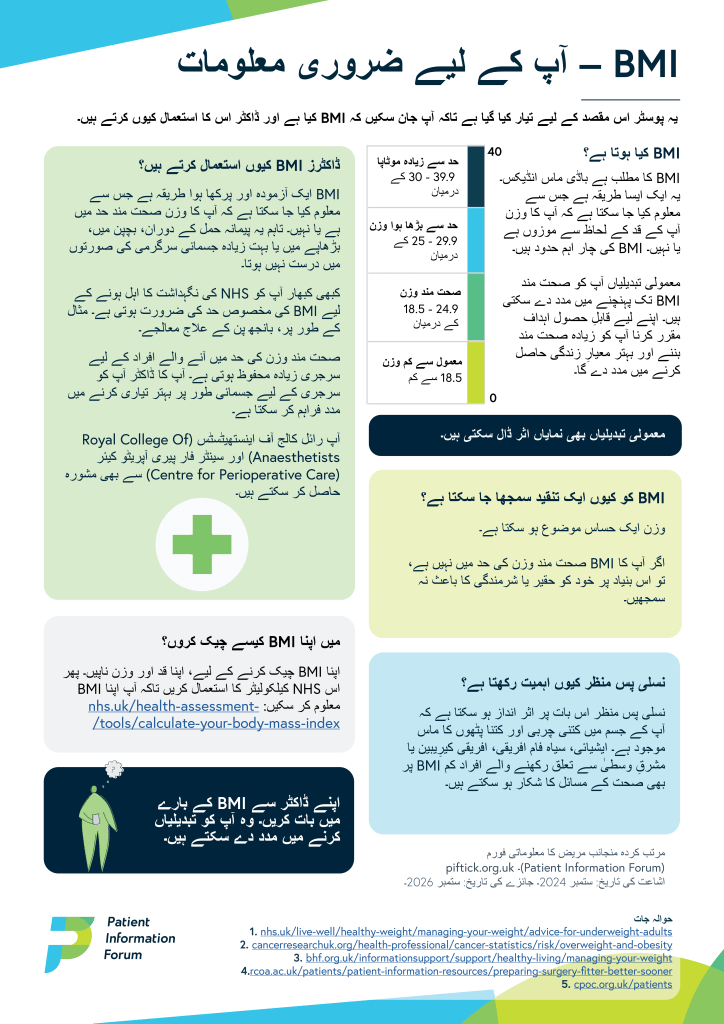
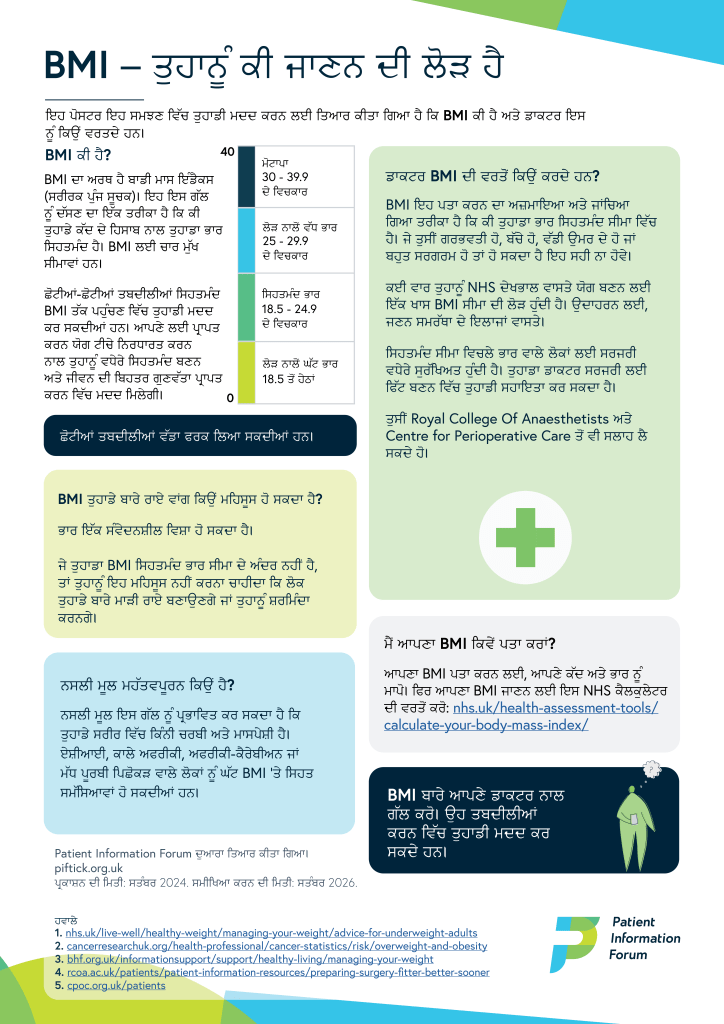
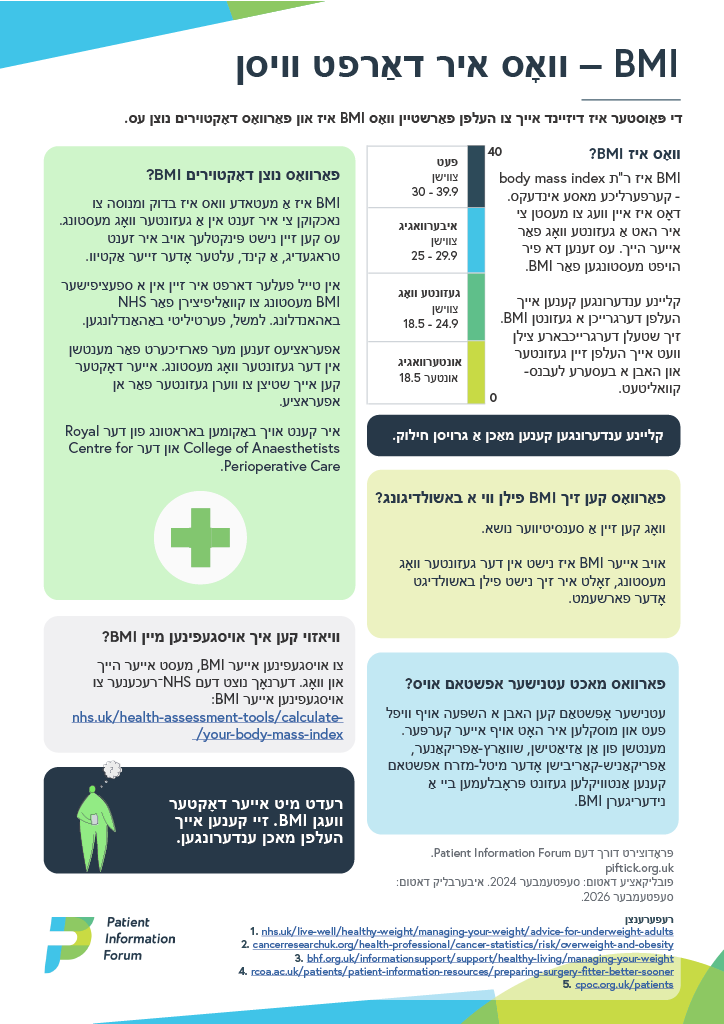
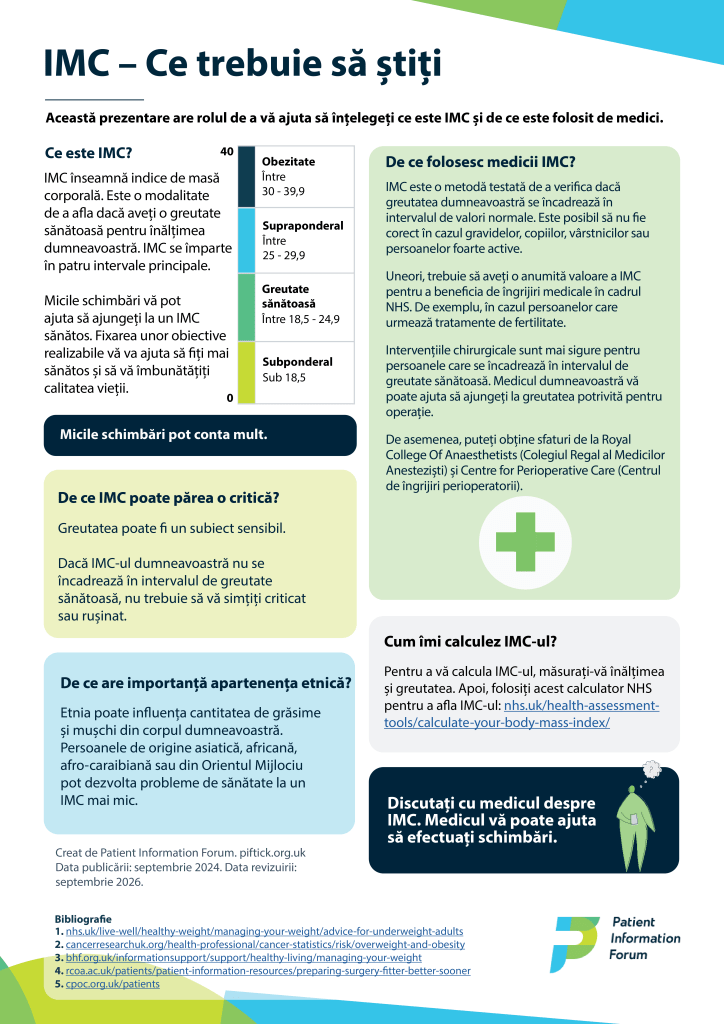
BMI stands for body mass index. It is one way to tell if you are at a healthy weight for your height. There are four key ranges for BMI.
| Underweight | Healthy weight | Overweight | Obese |
| Below 18.5 | Between 18.5 – 24.9 | Between 25 – 29.9 | Between 30 – 39.9 |
Small changes can help you reach a healthy BMI. Setting yourself achievable goals will help you to be healthier and have a better quality of life.
Why do doctors use BMI?
BMI is a tried and tested way of checking if you are in the healthy weight range. It may not be accurate if you are pregnant, a child, older or very active. Sometimes you need a specific BMI range to qualify for NHS care. For example, fertility treatments.
Surgery is safer for people in the healthy weight range. Your doctor can support you to get fitter for surgery. You can also get advice from the Royal College Of Anaesthetists and the Centre for Perioperative Care.
Why can BMI feel like a judgement?
Weight can be a sensitive subject. If your BMI is not within the healthy weight range, you should not feel judged or shamed.
Why does ethnicity matter?
Ethnicity can affect how much fat and muscle you have on your body. People from an Asian, Black African, African- Caribbean or Middle Eastern background can develop health problems at a lower BMI.
How do I check my BMI?
To check your BMI, measure your height and weight. Then use this NHS calculator to find out your BMI. Talk to your doctor about BMI. They can help you make changes.
References
- Healthy ways to gain weight
- Overweight and obesity statistics
- Managing your weight
- Preparing for surgery
- For Patients
Translated guides
Download the guide in Romanian – Română – by clicking here or listen by clicking on the play button.